
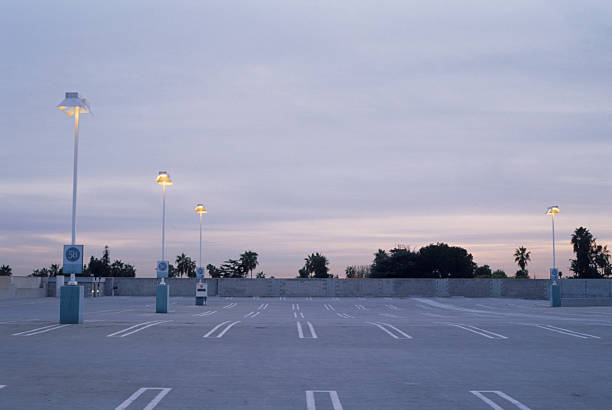
Every shopping center has periods when parking demand changes.
The reasons vary by property. Weather, school schedules, holidays, tenant mix, business cycles, and local events can all affect how much parking is actually needed.
Those slower periods can create a strategic opportunity.
Instead of viewing lower parking utilization simply as a problem, property owners can ask whether some of the available capacity can support a temporary revenue-generating use.
The first step is to identify the slow periods.
Look at parking utilization across the year. Identify areas that consistently have excess capacity and distinguish them from spaces that are needed for peak periods.
Then consider duration.
Some users need a few hours. Others need weekends, several weeks, or an entire season. The best match is one that fits the property’s available window.
Next, consider demand from temporary operators.
Farmers markets, inflatable parks, carnivals, seasonal attractions, car sales events, RV shows, food festivals, and community events all have different requirements.
A large carnival may need a substantial contiguous footprint. A farmers market may need only a recurring weekend window. A seasonal attraction may need a location for several weeks.
The property does not need to find one user for every opportunity.
In fact, a portfolio of short-term users can create more flexibility.
A property might host a market on selected weekends, a seasonal attraction during the summer, and an automotive event during another period. Each activation can be evaluated against the site’s parking needs and operating constraints.
This approach also helps avoid a common mistake: treating all empty parking spaces as equally available.
They are not.
A space may be physically empty but strategically important for customer circulation, future peak demand, snow storage, emergency access, or tenant operations.
That is why successful monetization begins with operational analysis, not sales.
The property team needs a clear understanding of what can be rented, when it can be rented, and under what conditions.
Once those parameters are established, the financial opportunity becomes easier to evaluate.
Owners can compare expected rental income against incremental costs such as security, cleanup, utilities, administration, site preparation, and potential wear and tear.
The result is a more disciplined approach to ancillary income.
There is also a potential customer benefit.
Temporary attractions can bring new reasons to visit a property. A farmers market can create recurring traffic. A family attraction can introduce the center to local households. A seasonal event can add activity during a period that might otherwise be quiet.
The strongest strategy combines both ideas: monetize available space while selecting uses that fit the property’s market and operational goals.
A slow parking season does not have to be economically passive.
With the right planning, the same space that sits underutilized during one period can become a temporary commercial asset during another.
KevaWorks helps property owners identify those windows and connect them with short-term users looking for well-located commercial space.
Every shopping center has periods when parking demand changes.
The reasons vary by property. Weather, school schedules, holidays, tenant mix, business cycles, and local events can all affect how much parking is actually needed.
Those slower periods can create a strategic opportunity.
Instead of viewing lower parking utilization simply as a problem, property owners can ask whether some of the available capacity can support a temporary revenue-generating use.
The first step is to identify the slow periods.
Look at parking utilization across the year. Identify areas that consistently have excess capacity and distinguish them from spaces that are needed for peak periods.
Then consider duration.
Some users need a few hours. Others need weekends, several weeks, or an entire season. The best match is one that fits the property’s available window.
Next, consider demand from temporary operators.
Farmers markets, inflatable parks, carnivals, seasonal attractions, car sales events, RV shows, food festivals, and community events all have different requirements.
A large carnival may need a substantial contiguous footprint. A farmers market may need only a recurring weekend window. A seasonal attraction may need a location for several weeks.
The property does not need to find one user for every opportunity.
In fact, a portfolio of short-term users can create more flexibility.
A property might host a market on selected weekends, a seasonal attraction during the summer, and an automotive event during another period. Each activation can be evaluated against the site’s parking needs and operating constraints.
This approach also helps avoid a common mistake: treating all empty parking spaces as equally available.
They are not.
A space may be physically empty but strategically important for customer circulation, future peak demand, snow storage, emergency access, or tenant operations.
That is why successful monetization begins with operational analysis, not sales.
The property team needs a clear understanding of what can be rented, when it can be rented, and under what conditions.
Once those parameters are established, the financial opportunity becomes easier to evaluate.
Owners can compare expected rental income against incremental costs such as security, cleanup, utilities, administration, site preparation, and potential wear and tear.
The result is a more disciplined approach to ancillary income.
There is also a potential customer benefit.
Temporary attractions can bring new reasons to visit a property. A farmers market can create recurring traffic. A family attraction can introduce the center to local households. A seasonal event can add activity during a period that might otherwise be quiet.
The strongest strategy combines both ideas: monetize available space while selecting uses that fit the property’s market and operational goals.
A slow parking season does not have to be economically passive.
With the right planning, the same space that sits underutilized during one period can become a temporary commercial asset during another.
KevaWorks helps property owners identify those windows and connect them with short-term users looking for well-located commercial space.